A Date You Didn’t Choose: Marking a Health Anniversary with a Peer

Some dates arrive with a card. Birthdays, Christmas, the first day of a holiday. Then there are the other dates — the ones you didn’t pick. The day a GP said the word that changed the shape of your year. The date of an operation. The morning of a first appointment that led somewhere you hadn’t planned to go.
People often call it a healthiversary. It’s not a universal term, and not everyone likes it. That’s fine. What matters is that the date exists, and sometimes it lands harder than expected. A peer pair can help with that — not by turning the day into a production, but by giving it a small, agreed shape.
The anniversary that doesn’t fit a card
Most anniversaries come with a script. You know whether to buy flowers, book a table or send a text. A health anniversary has no script. It might feel like grief, relief, anger, numbness or nothing at all. It might be the date of a diagnosis, a surgery, a first scan, a discharge, or the day you finally asked for help. It might matter enormously one year and barely register the next.
That unpredictability is exactly why a peer pairing can be useful. You don’t need to solve the date. You just need to avoid leaving someone alone with it if they’d rather have company — and avoid crowding them if they wouldn’t.
The Paired Peers idea is simple: shared experience, stronger together. But shared experience doesn’t mean identical experience. Your peer’s date is not yours. Your job is not to compare stories or decide how they should feel. Your job is to be a steady, low-fuss presence if that’s what they want.
Before the date: make a low-effort agreement
If you know the date is coming, try to agree the basics in advance. Not a big emotional summit. Just a quick message or a chat on a normal walk.
You could ask: ‘Do you want me to check in on the day, or would you rather I left it?’ And then offer a few options: a one-line text, a short walk, a cup of tea, or nothing at all. The point is to take the guesswork out of it. It also gives the person whose date it is permission to choose the quiet option without feeling rude.
It can help to agree a signal, too. Something like: ‘If you send me a full stop, I’ll know you’re having a flat day and I’ll just send back a heart.’ Or: ‘If you don’t reply, I won’t chase you.’ Small codes like this are not overcomplicated. They are just ways of being kind without making someone explain themselves twice.
Rituals that don’t demand much
A health anniversary doesn’t need a ceremony. In fact, the best two-person rituals are often the ones that would look unremarkable from the outside.
The one-line text
A short message can carry a lot: ‘I remembered the date. No need to reply. I’m around if useful.’ That last part matters. It offers company without creating an obligation. Avoid ‘Happy anniversary’ unless you know that’s the right tone. Avoid a long message that makes them feel they have to look after you. Keep it light, specific and easy to ignore if that’s what they need.
The short walk
Meet at a local park, a canal path or even a loop around the block. Twenty minutes is plenty. You don’t need to talk about the date unless they bring it up. Walking side by side can make conversation feel less intense, and it gives you both somewhere to look. Bring a flask if the weather is doing its usual November thing. A shared bench and a warm drink can be a ritual without anyone calling it one.
Kettle and ten minutes
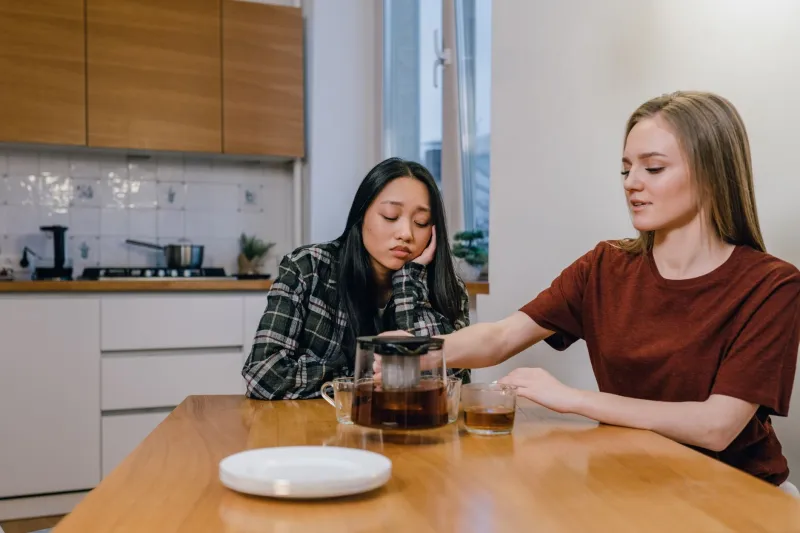
If walking isn’t possible, a kettle and ten minutes can do the job. Not a therapy session. Not a review of the last twelve months. Just two people, a biscuit and a bit of ordinary chat. Sometimes the most supportive thing you can do is be normal on a day that feels loaded.
The ordinary meet-up
You could also do something completely unrelated: a pharmacy run, a trip to the corner shop, a coffee, a bit of admin. The date is acknowledged by not pretending it isn’t there, but it doesn’t have to be the main event. This can be especially useful if the person hates fuss. They get company, you get to check in, and nobody has to make a speech.
When saying nothing is the right move
Not every anniversary wants attention. If your peer has said they’d rather not mark it, believe them. Silence can be a form of respect. It can also be a relief.
But silence is different from disappearance. If you’re unsure, ask once: ‘I remember the date is coming up. Would you like me to mention it or leave it?’ Then follow their lead. Don’t send a follow-up asking why they haven’t replied. Don’t make them manage your feelings about their date. And don’t assume that because they seem fine, they don’t want a quiet text. Sometimes people say ‘I’m fine’ because they don’t want to make a thing of it, not because they want to be forgotten.
The honest answer is that you won’t always get it right. Peer support isn’t about perfect timing. It’s about being willing to adjust.
The day after matters too
The anniversary itself gets all the attention, but the day after can be flatter. The anticipation has gone. The date has passed. The ordinary week resumes. A simple ‘How’s today?’ can be more useful than a big message on the day itself.
You could also agree to check in a week later, when the dust has settled. Not to analyse anything. Just to keep the connection warm.
A small shared language
Over time, a peer pair can build a private language for this stuff. ‘The date.’ ‘That week.’ ‘The anniversary thing.’ You don’t need a perfect label. You just need a way to refer to it without making it huge.
If you’re marking a health anniversary in 2026, keep it small, keep it agreed and keep it kind. A text, a walk, a cup of tea, or a deliberate decision to say nothing at all — all of these can be peer support. The date didn’t come with a script. You get to write a small one together.