Boots, Not Circles: Why the Best Peer Conversations Happen While Walking
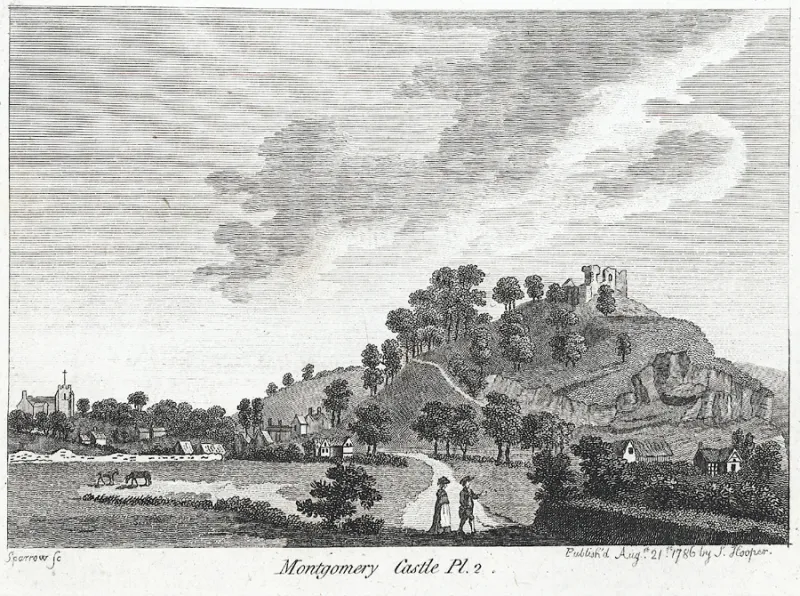
Photo: Samuel Sparrow, Public domain, via Wikimedia Commons
We've all been in the circle. Folding chairs arranged in a ring, a box of tissues placed optimistically in the middle, and the particular silence that arrives when it's your turn and you've nothing prepared. For plenty of people that format works, and long may it. But for a good number of us — the ones who find eye contact exhausting, who rehearse sentences before saying them, who freeze when a room waits — the circle is the least comfortable shape a conversation can take.
So here's the argument: put your boots on and walk instead.
The quiet tyranny of face-to-face
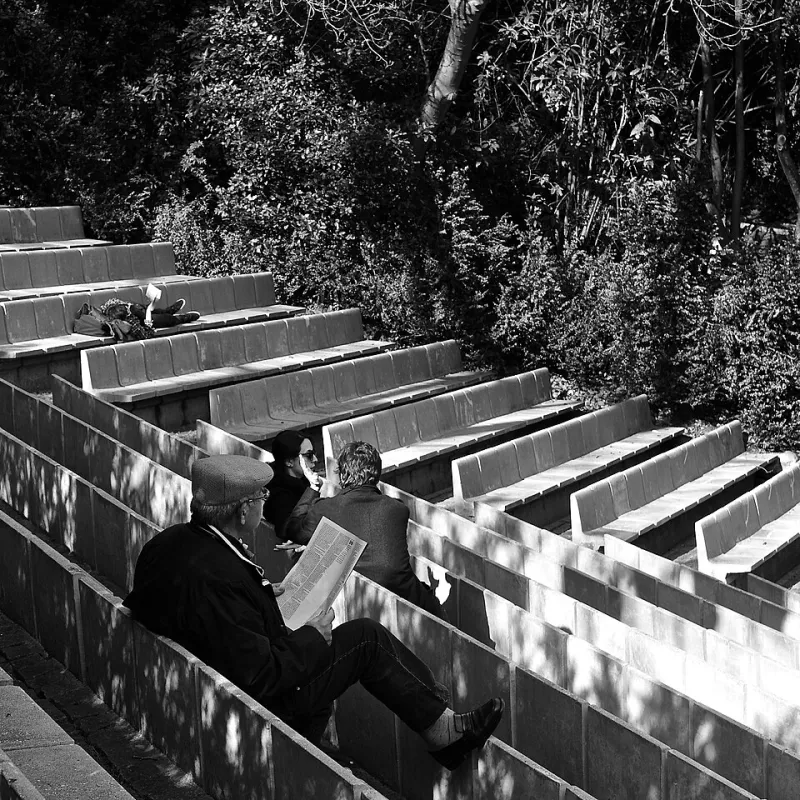
Sitting opposite someone and being looked at is a surprisingly high-pressure setup. It's not anyone's fault. It's just that a person's face is full of information — a flicker of concern, a slightly raised eyebrow — and if you're already anxious or low, you'll read all sorts of things into it. You'll start managing their expression instead of saying your piece.
Side by side, that whole layer disappears. There's a path ahead to look at, a hedge, a puddle, a dog coming the other way. Your attention has somewhere neutral to rest, and so does theirs. It's the same reason so many of the best conversations happen in cars or over washing up.
Why shoulder-to-shoulder works
A few things change when you walk:
Silences stop being awkward. A pause on a bench sits there like a lump. A pause on a footpath is just... walking. Nobody has to fill it, and often the best things get said once the pressure to fill it has gone.
There's a natural finish line. A circular route ends where it started. That's a built-in boundary, which makes it much easier to say difficult things. You know the conversation has a shape and an end.
The body does some of the work. Steady movement, cold air, a bit of daylight — none of it is a cure, but all of it shifts how a difficult conversation lands in your chest.
It feels like company, not a session. Some people would never describe themselves as the kind of person who goes to a support group. They will absolutely meet a mate for a walk.
We are, on the whole, a nation of walkers
This is what makes walking support such a natural fit here. We already walk for pleasure in a way that's fairly distinctive. We have towpaths threading through our towns, seafront promenades with a bracing wind, country parks with circular routes of two or three miles, and an entire culture of rambling that has been quietly going for decades.
We also, crucially, have a climate that has taught us to just go anyway. So it might drizzle. So the wind will get up on the prom. The national attitude of "we're going out, bring a coat" is exactly the right instinct for peer support — because a plan that only works in perfect weather isn't really a plan.
Making a walk work in a British winter
A few practical adaptations and the format survives from October to March.
- Shorten the route. An hour in the cold is plenty. Forty minutes is fine. The conversation doesn't need distance to be good.
- Choose surfaces over scenery. Tarmac paths, park loops and canal towpaths stay usable when grass turns to soup.
- Layer, don't armour up. You'll warm up after ten minutes and regret three jumpers. A waterproof shell over a couple of lighter layers is the sweet spot.
- Meet somewhere with a warm room at the end. A café, a pub with a quiet corner, a library foyer. Arriving somewhere dry gives the walk a natural close and an excuse to extend if it's going well.
- Agree the wet-weather plan in advance. Either you both walk anyway, or you reschedule to a phone call. What you don't want is the uncertainty that leads to a quiet no-show.
Starting a walking pair without it turning into a hike
The temptation, when you're excited about an idea, is to organise something ambitious. Resist it. The whole strength of this format is that it's low-effort and repeatable.
Start with one other person, or three at most. Pick a route you already know, in daylight, in a place that's easy to get to by public transport or a short drive. Tell someone where you're going. Meeting in a public place with a clear route is basic good practice for any new pairing, and it protects everyone involved.
The first walk doesn't need to be deep. Two people getting used to each other's pace on a loop around a park is doing exactly what it should. Some of the most valuable support happens in conversations that never quite get to the heavy stuff, because the trust was built on the tarmac months earlier.
Pace is a courtesy, not a detail
One thing worth saying out loud: agree to walk at the speed of the slower person. Not as a favour, but as a rule. If one of you is striding ahead and the other is half-jogging to keep up, nobody's talking honestly. The whole point of this is that the conversation has room to breathe.
The shape of things, side by side
None of this is an argument against groups or circles. Different people need different formats, and the same person may need a circle in January and a towpath in June. But if you've ever left a session feeling like you didn't quite say what you came to say, or you've thought about reaching out to someone and couldn't face the sitting-down part, try it outside.
Find your person. Find your loop. Go in whatever weather it is. There's something quietly powerful about walking the same path with someone, week after week, and realising you've both been getting further than you thought.