Hold Space, Not a Mirror: Better Words for Peer Support in 2026
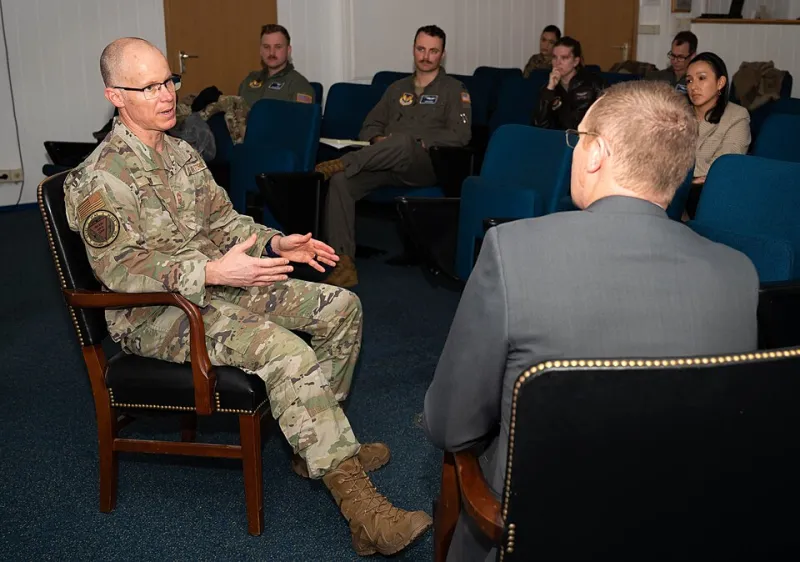
Photo: U.S. Air Force photo by Senior Airman Jared Lovett, Public domain, via Wikimedia Commons
Peer support has a phrase problem. It is not a malicious problem. It comes from the best place: you have been through something, you have read the room, and you want the other person to feel less alone. So you say: I know exactly how you feel. And sometimes that lands. Sometimes it does not. Sometimes it quietly tells the other person that their experience is already understood, filed and closed.
At Paired Peers, shared experience is the whole point. But shared is not identical. Two people can both live with chronic pain and have completely different lives, bodies, support networks and fears. Two people can both have lost someone and grieve in opposite directions. The stronger move is to hold space, not a mirror.
Here are seven swaps for UK support groups, one-to-one chats, waiting rooms and group chats in 2026.
1. 'That sounds really hard. I am here.'
This does the job of I know how you feel without claiming to know. It validates without comparing. It leaves room for the other person to tell you what is actually hard, rather than nodding along because you have already decided you understand. Keep it simple. Do not add but at least. Do not rush to the silver lining.
2. 'I have not been through that exact thing, but I can stay with you in it.'
Honesty is underrated in peer support. You do not need a matching story to be useful. You need to be present, reliable and willing to listen without making the conversation about your own history. If you do have relevant experience, you can offer it later. First, make room for theirs.
3. 'What has been the hardest part this week?'
This is a gentle question with a bit of traction. It avoids the trap of how are you, which usually gets fine, thanks, and a change of subject. It invites specificity without demanding a full medical history. It also gives you something concrete to respond to.
4. 'Would it help to talk it through, or would you rather I just listen?'
Ask before you fix. Some people want problem-solving. Many want company. Some want to say the same thing three times before it makes sense out loud. This question gives them the choice, and it saves you from offering a solution they did not ask for.
5. 'I do not want to assume. What does support look like for you today?'
This is the phrase for the friend who has been offered three casseroles and a yoga video and still cannot get to the pharmacy. Support is not one-size-fits-all. For one person it is a lift to an appointment. For another it is a text with no expectation of a reply. Ask, rather than guess.
6. 'I have had something similar, but everyone is different. Tell me how it has been for you.'
This is the bridge phrase. It offers shared experience without making it the headline. It says: I am not starting from zero, but I am not going to flatten your story into mine either. Use it carefully. If the other person does not want your story yet, let it go.
7. 'Thank you for trusting me with that.'
Disclosure costs something. It can cost energy, pride, privacy or a whole afternoon of feeling exposed. A simple thank you acknowledges that. Do not follow it with you are so strong unless you know they want that. Sometimes strength is not the point. Sometimes the point is that they told you, and you did not flinch.
The habits behind the phrases
Phrases are useful, but they are not magic. The habits matter more.
Ask before advising. A lot of peer support goes wrong when one person turns into a fixer. Fixing is not listening. It is a way of managing your own discomfort. If you are not sure whether advice is welcome, ask.
Reflect back what you heard. You can say: So the hardest bit is not the pain itself, it is having to keep cancelling plans. That gives the other person a chance to correct you, which is far better than assuming you got it right.
Do not minimise. At least you have got a diagnosis. At least you can work from home. At least it is not worse. These are exits, not bridges. So is everything happens for a reason. You do not have to agree with someone's view of their situation to take it seriously.
Holding space is not silent martyrdom. It is active. It is noticing when you have been talking for five minutes about your own similar experience. It is letting someone pass in a group without making it awkward. It is not vanishing after the group because you are not sure what to say next.
If someone discloses risk
Peer support has limits, and that is healthy. If someone talks about being at risk, do not promise confidentiality you cannot keep. Be honest, kind and clear. You can say: I am glad you told me. I am not the right person to keep you safe on my own, but I can help you find someone who is. Signpost to NHS 111, 999 or Samaritans as appropriate, and follow your group's safeguarding policy.
Shared experience, not identical experience
The goal of peer support is not to prove you have suffered too. It is to make room for someone else's story without crowding it. Shared experience is powerful when it opens a door. It becomes a problem when it closes one.
Try one swap this week. Replace I know exactly how you feel with I am here. Replace the urge to fix with a question. You do not need to get it perfect. You just need to be willing to listen again.
